On this page · 11 sections
- 01What does a PCB surface finish do?
- 02HASL vs ENIG vs OSP: how do they compare?
- 03What is HASL and when should you use it?
- 04Why choose ENIG for fine-pitch and BGA parts?
- 05What is OSP and what are its limits?
- 06How does each finish behave during assembly?
- 07What about immersion tin, immersion silver and ENEPIG?
- 08Does solder-mask colour affect the finish?
- 09Which surface finish is best for your board?
- 10Does the surface finish affect cost and lead time?
- 11How should bare boards be stored before assembly?
Building this board?
Bare copper oxidises within hours in ordinary air, and oxidised copper does not wet with solder. Every PCB therefore gets a surface finish over its exposed pads — one of the last chemical steps before the legend and routing. The finish you choose affects assembly yield, shelf life, cost and RoHS status. It is a one-line choice on your order that is worth getting right.
What does a PCB surface finish do?
A surface finish does three jobs. It protects copper from oxidation between fabrication and assembly. It gives solder a surface that wets quickly and consistently. And it sets the flatness of the pads that paste is printed onto, which matters more as parts get smaller. The finish goes on after the solder mask, so it covers only the copper the mask leaves open: pads, holes and any exposed test points.
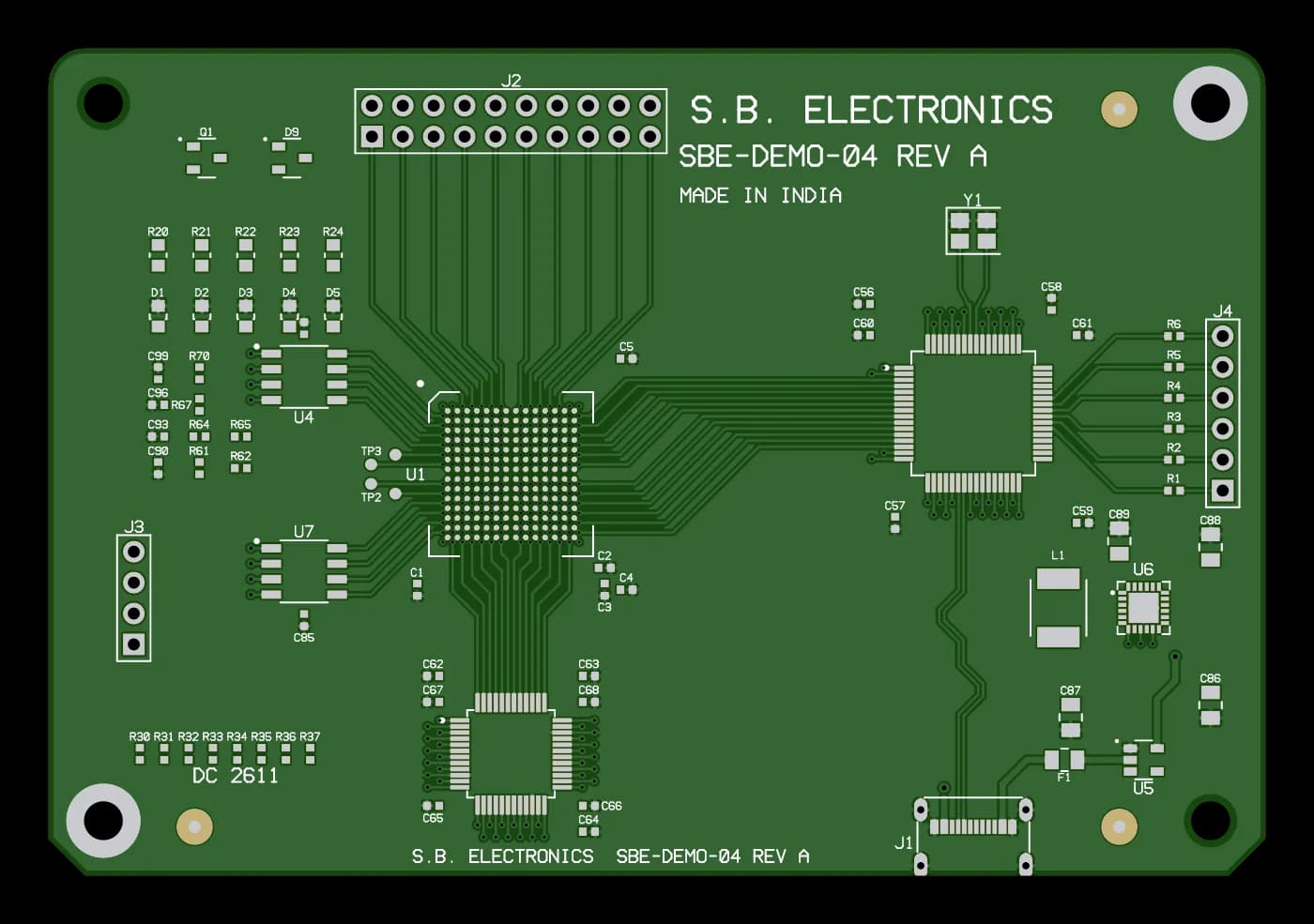
01HASL
Solder-coated pads: silver, slightly domed.
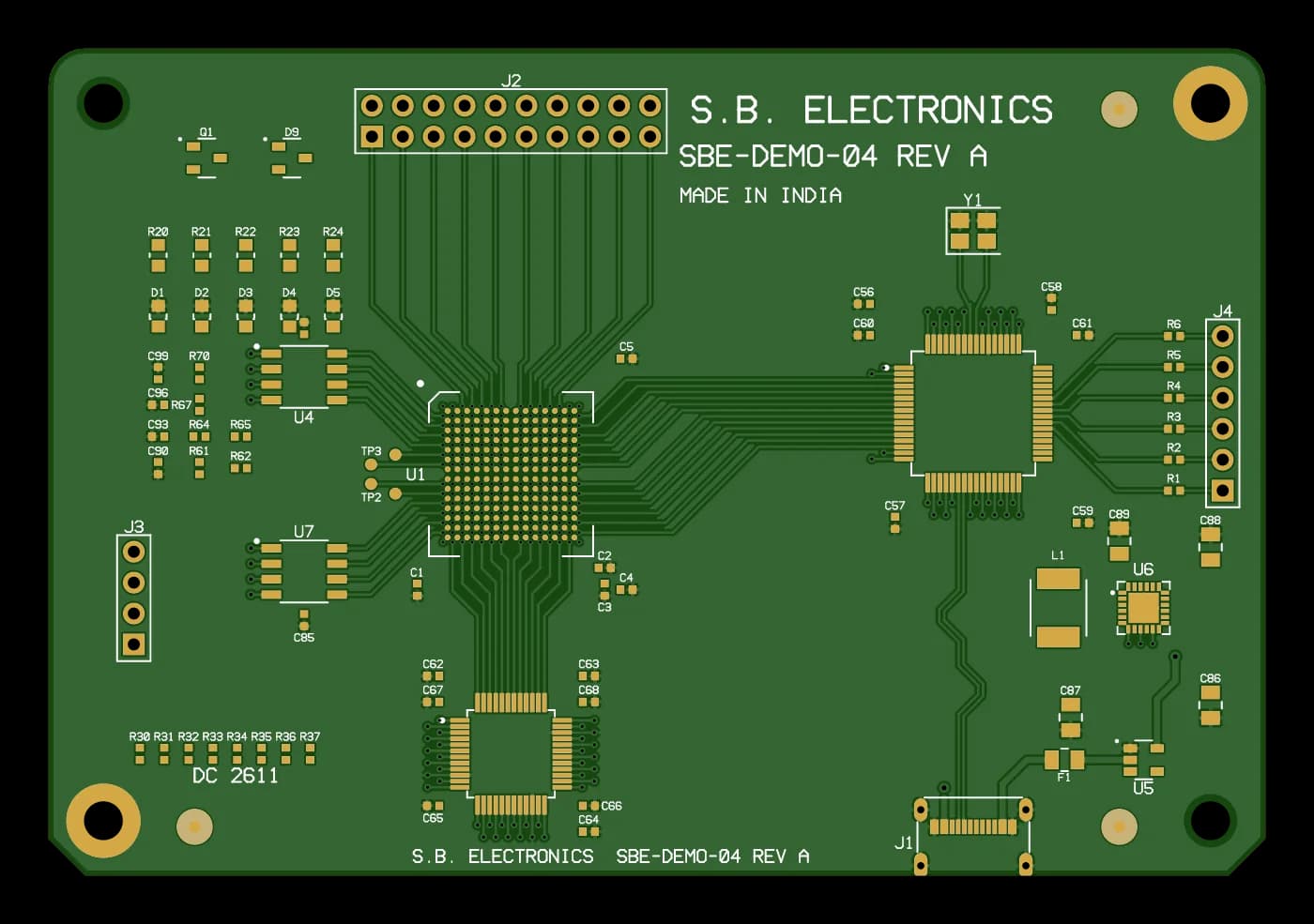
02ENIG
Gold over nickel: flat and long-lived.
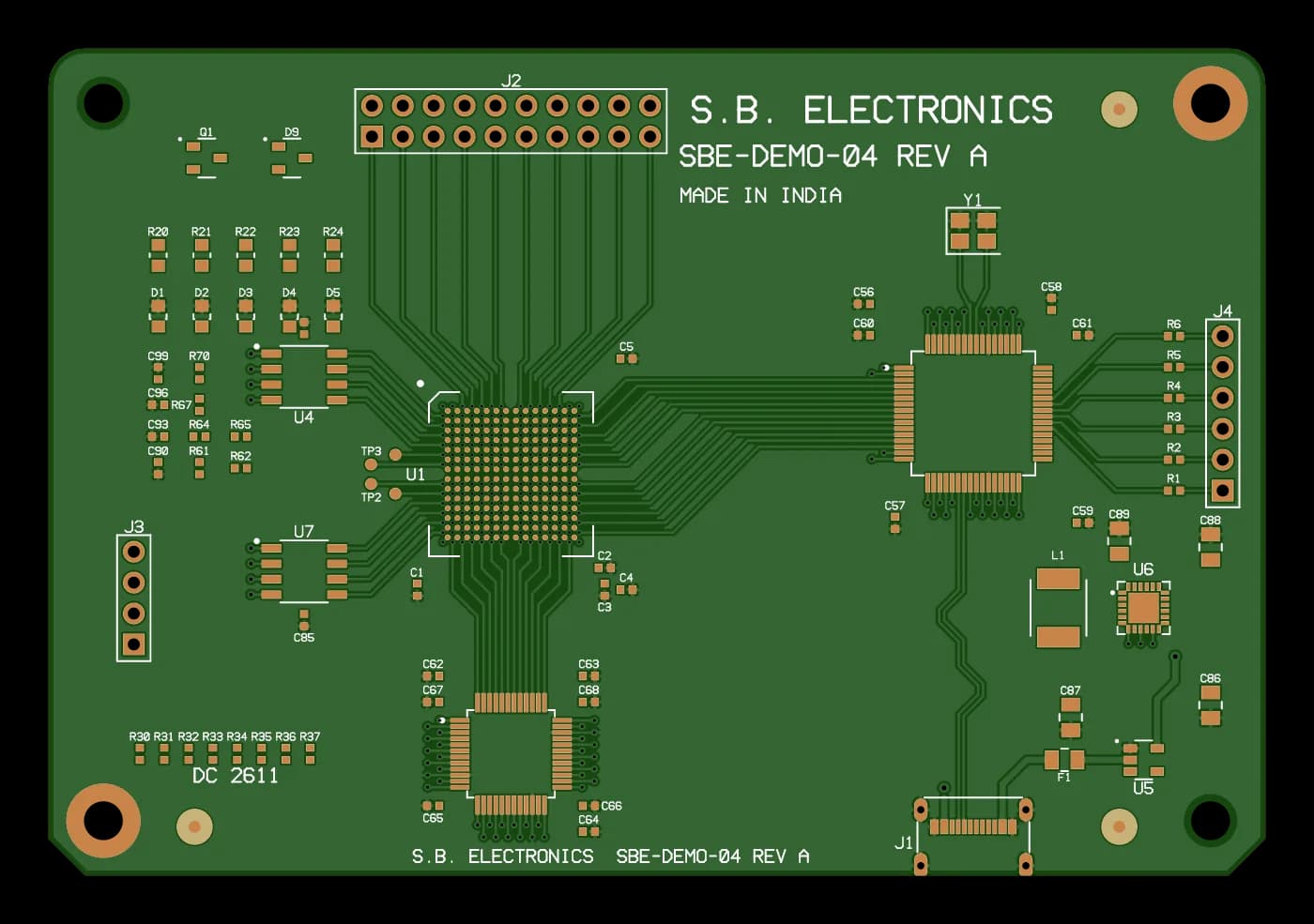
03OSP
Organic film on copper: flat, copper-coloured.
HASL vs ENIG vs OSP: how do they compare?
Table 1 · The four finishes we run
| Finish | Coating | Flatness | Shelf life (sealed) | RoHS | Relative cost |
|---|---|---|---|---|---|
| HASL (leaded) | Tin-lead solder, ~1–40 µm, uneven | Fair — domed pads | ~12 months | No | Lowest |
| Lead-free HASL | Tin-based solder, ~1–40 µm | Fair | ~12 months | Yes | Low |
| ENIG | Nickel 3–6 µm + gold 0.05–0.125 µm | Excellent — flat | ~12 months | Yes | Higher |
| OSP | Organic film, ~0.2–0.5 µm | Excellent — flat | ~3–6 months | Yes | Low |
Typical industry values for sealed, dry storage. Shelf life falls quickly once packs are opened in a humid shop. Scroll the table sideways →
We run all four in-house: HASL (leaded), Lead-free HASL, ENIG, OSP. Each is one option on your order, and for one- and two-layer boards the finish is part of the instant quote, so you see its effect on price before ordering.
What is HASL and when should you use it?
Hot air solder levelling (HASL) dips the panel in molten solder and blows the excess off with hot-air knives, leaving every pad coated in real solder. It solders superbly, tolerates rough handling and repeated heat cycles, and costs the least. Its weakness is topology: the coating is uneven — domed on small pads, thicker on some pads than others.
- Use it for: through-hole and standard-pitch SMT, hand-soldered boards, cost-driven products, power boards with large pads.
- Avoid it for: pitches below about 0.5 mm, BGAs and QFNs, very thin boards that may warp in the molten-solder dip, and — in its leaded form — any product that must be RoHS compliant.
The unevenness is measurable. Surface tension pulls the molten solder into a dome before the air knives level it, so coating thickness runs from a few microns on large pads to tens of microns on small ones. On a 0.5 mm-pitch QFP that variation is a large fraction of the paste deposit, which is why fine-pitch prints on HASL vary from pad to pad.
Lead-free HASL uses a tin-based alloy in place of tin-lead and runs hotter, so thin boards see more thermal shock. It wets slightly less readily than leaded HASL but meets RoHS, which makes it the default solder finish for most products sold today. The PCB glossary defines the terms used in this guide.
Why choose ENIG for fine-pitch and BGA parts?
Electroless nickel immersion gold (ENIG) plates 3–6 µm of nickel onto the copper, then a thin layer of gold, typically 0.05–0.125 µm, by immersion. The gold keeps the nickel from oxidising and dissolves into the solder during reflow; the joint itself forms on the nickel. The result is perfectly flat pads that stay solderable for about a year and survive several reflow cycles.
- Use it for: BGA, QFN and fine-pitch QFP at 0.4–0.5 mm, double-sided reflow, long storage before assembly, press-fit holes (the coating does not change hole size the way HASL can) and flat contact pads for keypads and spring contacts.
- Watch out for: cost, and process control. Poorly controlled ENIG can suffer black pad — a corroded nickel surface that gives brittle joints. The cure is disciplined bath control and deposit checks, not avoiding ENIG.
ENIG gold is too thin for sliding contacts that wear, such as edge-connector fingers inserted hundreds of times. Those need electroplated hard gold, a different process; ask us before you design them in.
What is OSP and what are its limits?
Organic solderability preservative (OSP) is a very thin organic film, around 0.2–0.5 µm, that bonds to copper and stops it oxidising. It is flat, lead-free, inexpensive and chemically simple. The trade-off is durability: the film degrades with time and with every heat cycle.
- Use it for: high-volume SMT with a short, predictable path from fabrication to assembly, where flat pads are needed at the lowest cost.
- Watch out for: a shelf life of about 3–6 months sealed; each reflow pass weakens the film, so the second side of a double-sided board solders onto a tired surface; fingerprints and handling marks; and copper left exposed after assembly, such as test pads, which will tarnish.
How does each finish behave during assembly?
HASL brings its own solder to the joint, so it wets fastest and forgives a slightly short paste deposit — but its domes can tilt a fine-pitch part or rock a QFN off its thermal pad. ENIG wets a little more slowly, because the solder must dissolve the gold and bond to the nickel beneath, but its flat pads print and place most consistently. OSP must be removed by the flux before solder can wet, so it relies on an active flux and a profile that does not exhaust it; the second reflow on a double-sided OSP board is the step to watch. For hand soldering and rework, HASL is the most forgiving finish and ENIG is close behind.
What about immersion tin, immersion silver and ENEPIG?
Three other finishes appear on fab drawings. Immersion tin gives a flat, solderable surface that suits press-fit pins, but it is sensitive to handling and keeps for less time. Immersion silver is flat and solders well, and is popular for RF work, but it tarnishes in sulphur-bearing air unless packed carefully. ENEPIG adds a palladium layer between the nickel and the gold, which makes it suitable for gold and aluminium wire bonding as well as soldering, at a higher cost. These are not on our standard list; if your design needs one, raise it at the quote stage and we will discuss the options.
Does solder-mask colour affect the finish?
Not electrically. The finish sits only where the mask is open, so mask colour changes how the board looks, not how it solders. Colour does matter for manufacturing around the finish: green gives the best contrast for optical inspection and is the most proven; white reflects light on LED boards but can yellow with heat; black hides tracks, which makes visual inspection and rework harder. Any finish works with any colour. We offer green, red, blue, black, white, yellow solder mask.
Which surface finish is best for your board?
There is no single best finish — there is a best finish for your pitch, your compliance needs and your schedule. Use this table as the starting point.
Table 2 · Quick selection guide
| If your board… | Choose | Because |
|---|---|---|
| Uses standard pitch (0.65 mm and up), cost matters, RoHS not required | HASL | Lowest cost and the most forgiving solderability |
| Uses standard pitch and must be RoHS compliant | Lead-free HASL | A RoHS-compliant solder coating |
| Has BGA, QFN or pitch of 0.5 mm or finer | ENIG | Flat pads give a consistent paste print |
| Will be stored for months before assembly | ENIG | Long, stable shelf life |
| Runs at high volume with a fast fab-to-assembly turnaround | OSP | Flat and low cost |
| Is mostly through-hole and hand-soldered | HASL or lead-free HASL | Solder is already on the pads |
Does the surface finish affect cost and lead time?
Yes, modestly. HASL and OSP are the least expensive finishes; ENIG costs more because it uses gold and a longer chemical sequence, and the premium shows most on small boards with a lot of exposed copper. Lead time is normally unaffected when the finish is one a factory runs every day. Ask yourself what the finish costs against what a reflow defect costs: on a board with a 0.4 mm-pitch BGA, ENIG is usually the cheaper choice overall.
How should bare boards be stored before assembly?
Every finish lasts longest sealed and dry. Keep boards in their packaging until the day of assembly, store the packs flat and away from heat, and use the oldest date codes first — OSP boards before anything else. Laminate absorbs moisture too: boards stored for a long time in humid conditions may need a bake before reflow to avoid blistering or delamination, so follow your assembler's practice. When we assemble the boards ourselves, the gap between finish and reflow is short — one less variable to manage, and one reason to keep PCB assembly under the same roof.
Written by
S.B. Electronics Engineering Team
The CAM, production and quality engineers at our factory in the Gandhinagar G.I.D.C. Electronics Estate — the people who review incoming data and build the boards. Published ; last reviewed and updated .